
Building a Pathway for Agricultural Transformation in Liberia
In Liberia, rice is central to the country’s food security, rural livelihoods, and agricultural ambitions. Yet local rice production continues to face significant challenges. Low soil fertility, limited access to agricultural advisory services, and gaps in research and technical capacity constrain farmers’ ability to improve productivity. Liberia spends an estimated US$250 million annually on rice imports, while average lowland rice yields remain at approximately 1.6 to 2.0 t/ha.
For farmers, improving productivity is not simply a matter of applying more fertilizer. It requires understanding their soils, choosing the right agricultural practices, accessing reliable technical advice, and seeing tangible results in their own fields. How can scientific knowledge be translated into practical solutions that help Liberian farmers produce more, improve their livelihoods, and strengthen the country’s food security?
A shared vision for stronger agricultural systems
Following an invitation from Liberia’s Ministry of Agriculture (MOA), APNI’s delegation comprising Dr. Kaushik Majumdar, Director General; Dr. Shamie Zingore, Director of R&D; and Dr. Canon E.N. Savala, Senior Scientist in Soil Fertility and Capacity Development, travelled to Liberia to explore opportunities for collaboration.
The mission brought together government representatives, researchers, academics, and development partners around a shared ambition: strengthening Liberia’s agricultural capacity through science-based plant nutrition, professional development, and practical farmer support. During discussions with the MOA, the gap between agricultural knowledge and its application in farmers’ fields stood out as a key challenge.
With an estimated one extension officer serving approximately 30,000 farmers, delivering consistent and locally relevant agricultural advice remains a major challenge. The discussions highlighted the importance of strengthening the existing extension system, equipping agricultural advisers with practical skills, and connecting research institutions more closely with farmers.
Rice is a natural starting point for this collaboration, given its importance to national food security and the potential to improve productivity through better nutrient and crop management. The national ambition is to move average production toward at least 3 t/ha, with better-managed lowland systems potentially achieving 3.5 to 4 t/ha. However, to meet this goal, farmers need solutions that directly respond to their local conditions, resources, and production challenges.
Connecting research with the realities of farming
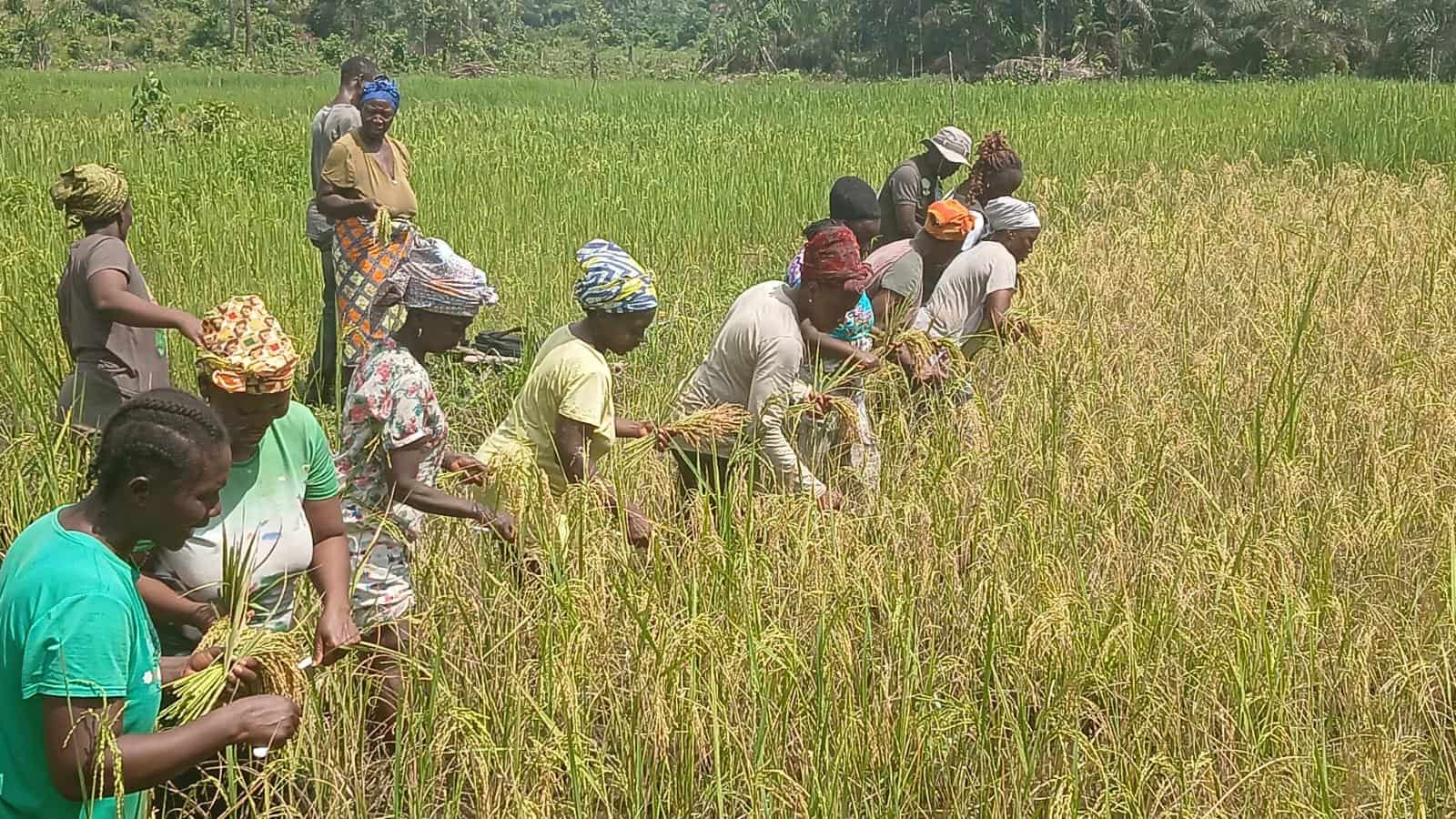
The delegation’s visit to the Central Agricultural Research Institute (CARI) in Bong County brought the discussions closer to the scientific foundations of agricultural productivity. CARI has undertaken nutrient omission trials for rice and cassava in five counties and contributed to soil sampling activities across Liberia’s 15 counties through the Soils4Liberia initiative. These efforts provide valuable information about the country’s soils and crop production environments. However, soil information alone cannot tell a farmer which fertilizer to use, how much to apply, or when and where to apply it.
Recommendations must also consider crop response, rainfall, soil conditions, input availability, and the farmer’s economic circumstances. A collaboration combining CARI’s research capabilities with APNI’s technical expertise is aimed at generating locally validated recommendations that farmers can understand, afford, and apply. On-farm experimentation and demonstration plots would play an important role in this process as they allow farmers to observe the performance of different nutrient-management practices under real production conditions. The goal is not simply to generate more research, but to ensure that research leads to better decisions in the field.
Investing in the people behind agricultural transformation
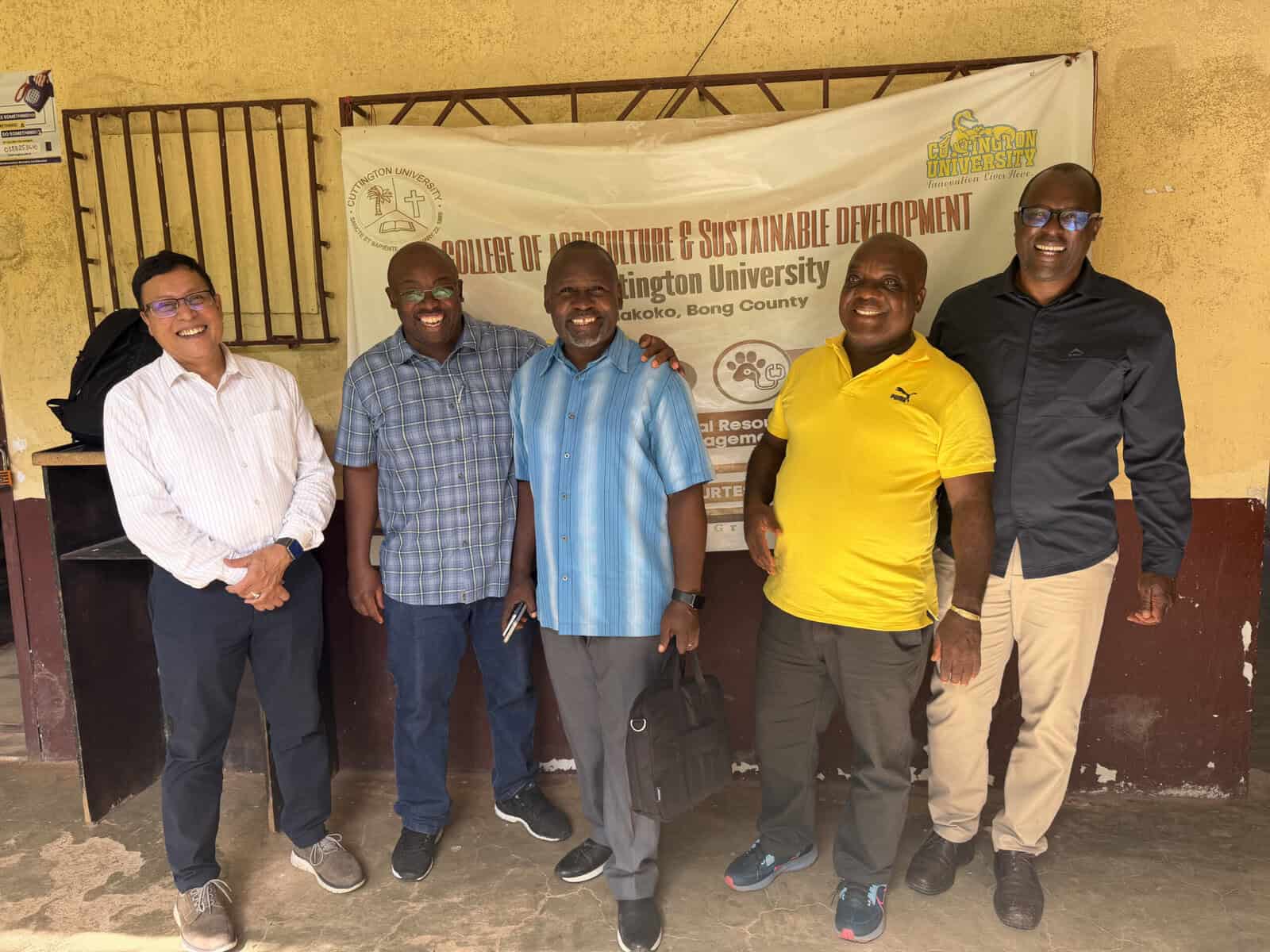
Scientific knowledge can only make a lasting difference when people have the skills and institutional support to apply it. While at Cuttington University in Suacoco, the APNI delegation explored opportunities to strengthen agricultural education, graduate research, and professional development.
The University’s College of Agriculture and Sustainable Development serves approximately 300 undergraduate students and has recently launched an agriculture master’s program with 11 students. This emerging graduate program creates opportunities to develop locally relevant research while strengthening the next generation of Liberian agricultural scientists.
Discussions explored potential collaboration in research methods, field experimentation, scientific writing, data analysis, joint supervision, and academic mentoring. The mission also highlighted the potential role of APNI’s Professional Certified Agronomy Advisor Program (PCAAP) in strengthening Liberia’s agricultural advisory services.
Rather than establishing a separate extension structure, the proposed approach would support the development of a nationally owned professional pathway, combining technical training, practical field experience, competency assessment, and continuing professional development.
By connecting researchers, universities, and extension professionals, the collaboration could help create a continuous pathway through which scientific evidence informs education, agricultural advice, and ultimately farmers’ decisions.
Building on existing partnerships and national expertise
The mission also included discussions with the FAO in Liberia who’s ongoing work in soil information, agricultural training, crop suitability, nutrition, and post-harvest management offers opportunities to complement the proposed collaboration between APNI and the MOA.
Farmers must also be able to protect the value of what they produce through improved harvesting, drying, storage, processing, and access to markets. With post-harvest losses reported at approximately 35 to 40% in parts of the harvest-to-consumption chain, improvements in crop productivity need to be accompanied by efforts to reduce losses and improve economic returns. The engagement with FAO identified potential areas for future technical cooperation and resource mobilization, building on existing national programs rather than duplicating them.
The road ahead
By the conclusion of the five-day mission, discussions had moved beyond identifying challenges toward defining a practical pathway for collaboration.
Rice was identified as the first technical focus, with the proposed initial phase combining plant nutrition, research, professional capacity development, and on-farm learning.
The MOA and APNI also identified focal persons to coordinate the next steps and agreed in principle to prepare a Memorandum of Action outlining institutional responsibilities, technical activities, resource contributions, and measurable results.
The next phase will focus on translating these discussions into an actionable workplan, identifying suitable pilot locations, and preparing an initial group of agricultural trainers and extension personnel.
A follow-up APNI mission is proposed for late February or early March 2027, ahead of the April-May planting period, with the aim of advancing technical preparations and delivering rice-focused training of trainers.
The proposed collaboration remains subject to formal institutional review, resource mobilization, and approval of the implementation arrangements.
Beyond rice, the longer-term vision is to build a professional and scientific foundation that could support other priority crops, including cassava, maize, legumes, coffee, cocoa, and oil palm.
A foundation for lasting impact
Liberia’s agricultural transformation will depend not only on access to improved inputs and technologies, but also on the ability of its institutions and agricultural professionals to turn knowledge into practical solutions.
By bringing together the MOA, national research and education institutions, development partners, and APNI’s expertise in plant nutrition, the mission has laid the groundwork for a collaborative approach that places local capacity at the centre of agricultural development.
The next step is to translate this shared vision into field-level action, where locally tested recommendations, better-trained advisers, and farmer participation can contribute to improved agricultural productivity. Because the real measure of agricultural progress is not only the knowledge generated, but how that knowledge reaches farmers and helps them achieve better harvests.