
Writing Workshop Developing On-farm Experimentation Manual
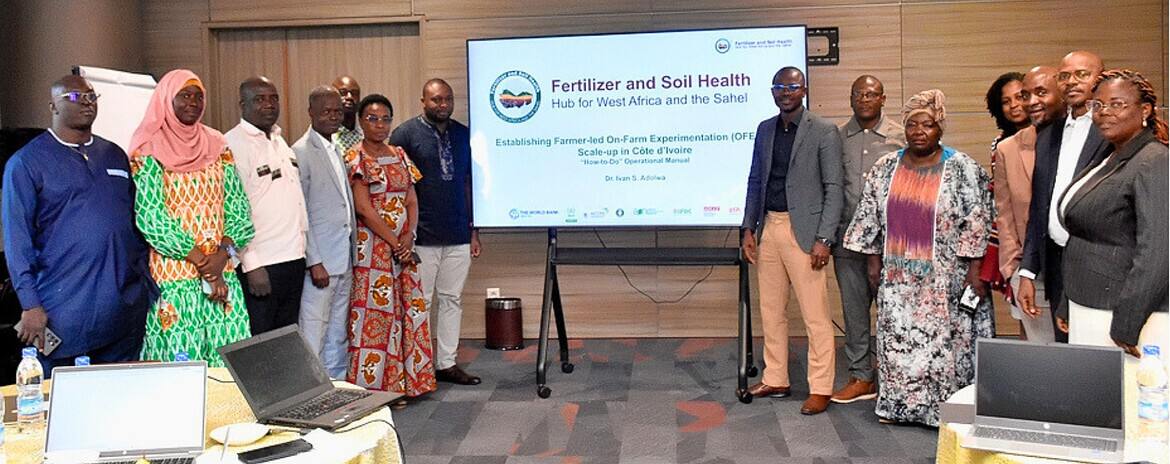
This workshop took place At Azalaï Hotel in Abidjan, Côte d’Ivoire, from 5th to 7th May, 2026, with the participation of twelve (12) subject matter experts from the National Center for Agricultural Research (CNRA), the National Agency for Support to Rural Development (ANADER), the Ministry of Agriculture, Rural Development, and Food Crop Production (MINADERPV) in Côte d’Ivoire, and three scientists from APNI.
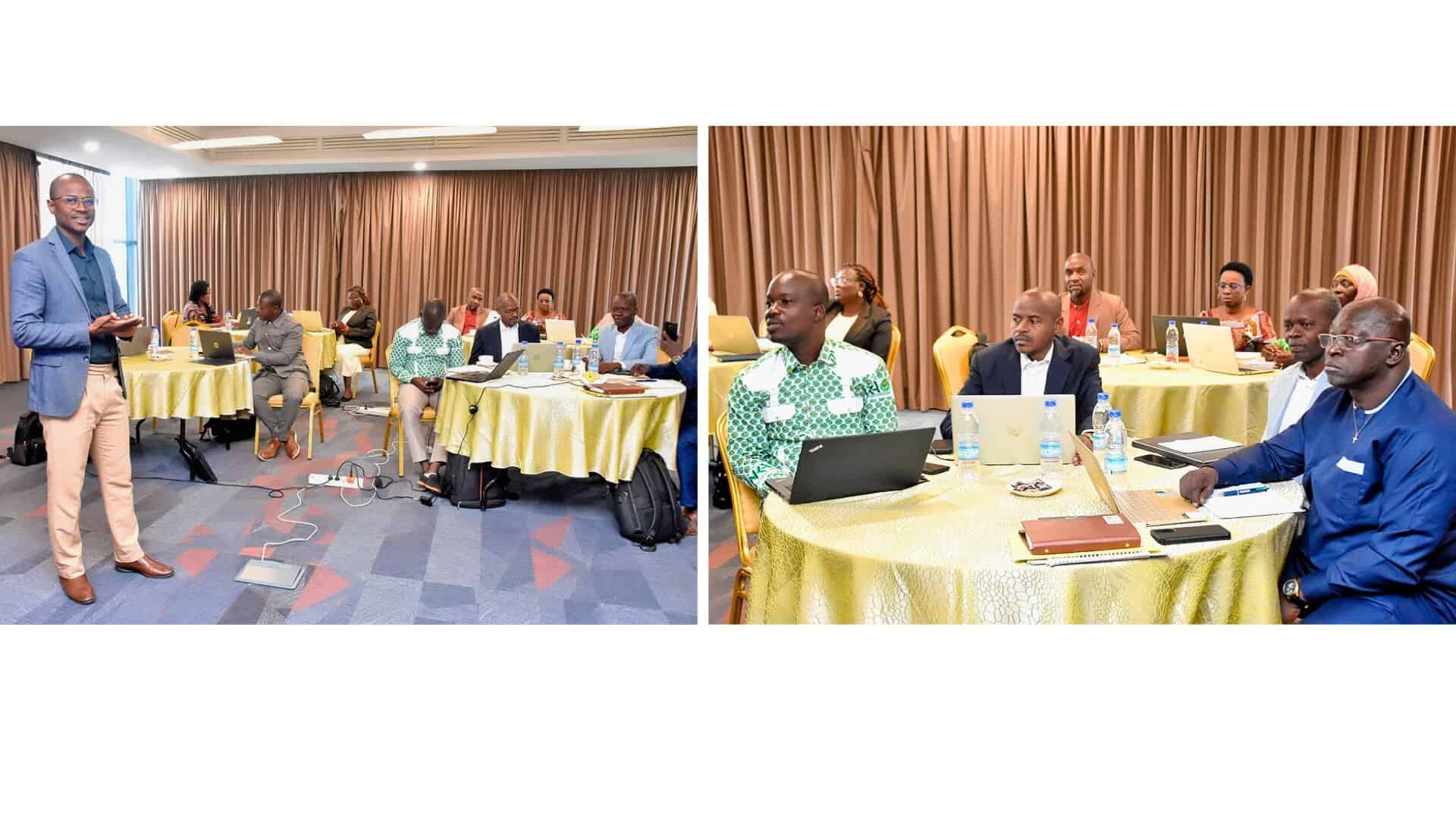
On the first day of the workshop, the discussion centered on the development of an operational manual for Farmer-Led On-Farm Experimentation (OFE) in Côte d’Ivoire, with emphasis on ensuring that the document is practical, participatory, and relevant to national agricultural realities. Before general discussions, presentations were made to stakeholders by APNI representatives to remind them of the Hub functions and, more importantly, clarify the task of writing the operational manual. APNI scientists took the participants through guiding questions related to each section of the manual as per the table of contents and ToR circulated prior. Participants agreed that the manual should primarily serve extension and advisory actors, researchers, training institutions, the private sector, and policymakers involved in agricultural innovation and experimentation related to fertilizer use and soil health regeneration. Considerable debate focused on terminology, particularly regarding agricultural advisory services, where participants preferred inclusive expressions that capture the diversity of actors involved, including public extension services, NGOs, producer organizations, agriculture interprofessional bodies, private-sector actors, and commodity systems such as cocoa and cotton.
The role of research institutions was also extensively discussed. Participants recognized the central mandate of the CNRA while acknowledging the important contributions of universities and regional or international research institutions. Coordination among research actors was considered essential to avoid duplication of efforts and improve the efficiency of agricultural innovation systems. The manual was therefore expected to remain adaptable to future institutional developments within the research landscape.
Participants further clarified the role of policy actors and agreed that the MINADERPV should remain the principal policy institution targeted by the manual, although other ministries linked to environment, livestock, education, finance, youth, and gender issues may also contribute to implementation and financing. Training institutions, including universities and agricultural schools, were identified as important users because the manual could support the preparation of future extension agents and agricultural professionals.
A key distinction emerged between the “target public” and the “direct users” of the manual. The consensus was that the manual should primarily address operational users such as extension agents, researchers, trainers, technical advisors, and implementing institutions, while also recognizing farmer organizations and cooperatives as strategic stakeholders in experimentation and scaling processes. Participants debated whether the document should be described as a “guide” or a “manual,” ultimately concluding that it should function as an operational manual containing practical procedures, tools, and structured guidance for implementing OFE activities.
The discussion devoted substantial attention to defining OFE itself. Participants emphasized that OFE differs from conventional top-down research because it directly involves farmers in identifying problems, testing solutions, interpreting results, and co-creating innovations. OFE was described as participatory, interdisciplinary, context-specific, iterative, and scalable. The approach combines scientific evidence with local and indigenous knowledge while strengthening farmer learning and ownership. Participants also highlighted the innovative dimensions of OFE compared to existing participatory approaches in Côte d’Ivoire, including stronger farmer involvement, more rigorous data collection and analysis, structured multi-stakeholder collaboration, and deliberate scaling of successful innovations.
Another major theme was the characterization of agricultural systems and intervention zones. Participants recommended that the manual include concise information on agroecological zones, climate conditions, soils, crops, production systems, and soil fertility management practices using summary tables for clarity. They also emphasized the importance of establishing clear criteria for selecting intervention areas and farmer groups, including the severity of soil fertility problems, the presence of active farmer organizations, access to extension services, innovation dynamics, and local institutional capacity. Concerns were raised about the weak functionality and accountability of some producer organizations, leading participants to stress the need for proper verification of organizational legitimacy and representativeness before implementation.
Integrated Soil Fertility Management (ISFM) emerged as a core technical concept within the OFE framework. Participants described ISFM as the combined use of improved seeds, sound agronomic practices, organic and inorganic nutrient sources, and local farmer knowledge to progressively improve productivity and soil health. They stressed that technologies must be adapted to local conditions and resources, including livestock manure, compost, legumes, or other locally available inputs.
The discussions also highlighted the importance of stakeholder mapping and clearly defining institutional roles and expertise throughout the OFE process. Participants recommended including systematic stakeholder tables identifying responsibilities, expected contributions, and engagement mechanisms for policymakers, researchers, extension agents, civil society, private-sector actors, and development partners. They further proposed linking specific expertise—such as agronomy, soil science, statistics, facilitation, sociology, and climate science—to different stages of implementation.
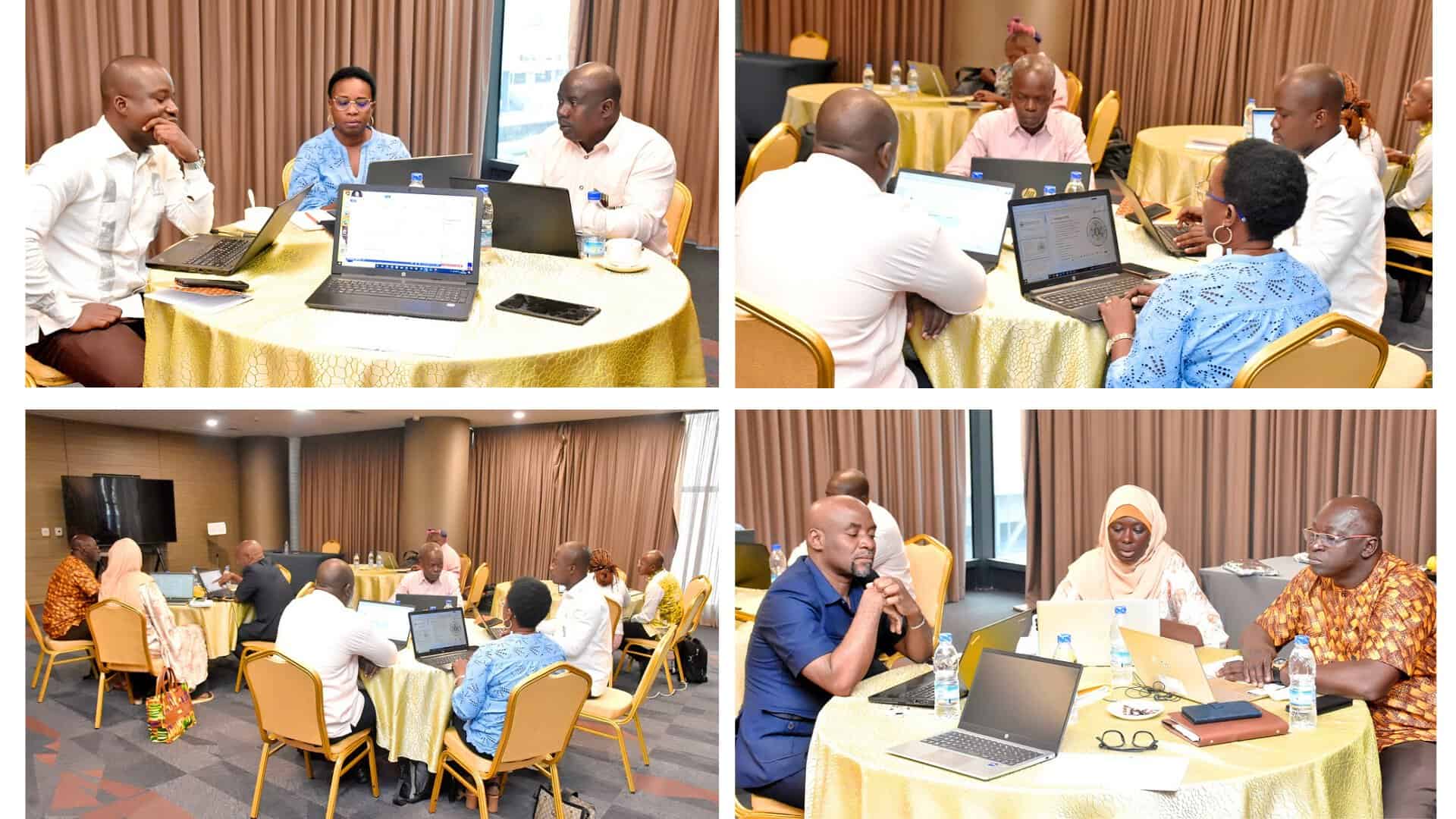
At the end of day one, participants were organized into three thematic working groups to draft sections of the manual covering farming systems, stakeholder engagement, competency assessment, experimentation methods, data collection, and co-learning processes. The second day of the workshop was fully dedicated to the write-up of the different sections.
On the final day, participants presented and discussed the developed draft manual. The first thematic area to be presented and discussed was focused on sections 5 and 6, i.e., Experimentation and Data Collection and Data Organization, Analysis, and Management. Section 5 addressed the identification of technological gaps affecting major crops such as maize, cassava, rice, yam, cocoa, oil palm, and cotton. These gaps included low soil fertility, poor yields, inadequate use of improved varieties, weak knowledge of integrated soil fertility management (GIFS), pest and disease pressure, and climate-related constraints. Participants emphasized that identifying these gaps should involve researchers, extension services, private actors, and farmers through participatory diagnostics and prioritization exercises. The section also proposed simple experimental designs, standardized data collection methods, participatory evaluation tools, and the application of the 4R Nutrient Stewardship principles of plant nutrition (right source, right dose, right time, and right place).
Section 6 focused on data organization, analysis, interpretation, and validation. The manual proposed establishing secure and traceable databases, using digital tools such as KoboToolbox, Excel, and R software, and analyzing agronomic, economic, and adoption-related data. Participants discussed the importance of linking yields, profitability, management practices, and farmer learning outcomes. Multi-stakeholder validation processes involving researchers, extension agents, policymakers, and farmers were highlighted as essential before recommendations could be officially disseminated and scaled up.
During the discussion, several concerns and recommendations were raised. Participants noted that the manual was too detailed and resembled a technical textbook rather than a practical operational guide. They recommended restructuring the document into clear step-by-step stages, such as identifying productivity gaps, agreeing on experimental protocols, establishing trials, collecting data, monitoring experiments, analyzing results, and conducting joint interpretation sessions. It was emphasized that the manual should provide guidance rather than crop-specific technical prescriptions.
Participants also pointed out gaps in the inclusion of horticultural crops and vegetable systems, particularly tomatoes and other crops with important soil health and pest management challenges. Others stressed the need to clearly define the roles of extension agents, host farmers, and lead farmers during data collection to avoid duplication and inconsistencies. Concerns were also expressed about the complexity of some parameters, such as chlorophyll measurements, which may be difficult for farmers to understand or measure accurately in field conditions.
A key recommendation was to simplify the language used throughout the manual so that it can be understood not only by scientists but also by farmers, extension workers, and policymakers. Statistical concepts should be translated into more accessible explanations during joint analysis sessions. Participants further clarified that the OFE approach aims to integrate existing innovations from agronomy, soil fertility, pest management, and crop protection into holistic technology packages tested together in real farming conditions. Overall, the group agreed that this section of the manual contains valuable information but requires restructuring, simplification, and clearer presentation to function effectively as a practical guide for stakeholders.
The next discussion was on sections 3 and 4, i.e., Stakeholder Mapping and Engagement and the Competency Framework for OFE. Section 3 focused on strengthening the implementation of the On-Farm Experimentation (OFE) approach through better stakeholder collaboration, clearer coordination mechanisms, and stronger technical expertise. Participants first identified the main actors involved in the OFE process and clarified their responsibilities. Research institutions such as the CNRA/CIMRA were tasked with designing participatory experimental protocols, developing data collection tools, training stakeholders on innovations, analyzing data, and supporting beneficiary identification. Extension services, particularly ANADER, were expected to identify beneficiaries, support the establishment and monitoring of trials, assist in data analysis, and strengthen farmers’ organizational and decision-making capacities. The MINADERPV was recognized as the coordinating and supervisory body responsible for validating innovations and facilitating collaboration among stakeholders. Farmer organizations and producer associations were expected to identify localities and lead farmers, participate in trial implementation, and contribute to evaluating results. Lead farmers themselves were recognized as essential actors responsible for collecting field data and monitoring activities, while private-sector input suppliers would provide agricultural inputs and related services. APNI was identified as a technical support partner for research activities.
The participants emphasized that the OFE approach should differ fundamentally from traditional top-down approaches by promoting genuine co-construction and horizontal collaboration among all actors. Rather than each institution operating in isolation, all stakeholders should jointly plan, implement, monitor, and evaluate activities. Farmers’ knowledge and perspectives were considered equally important in shaping innovations and experimental designs. The discussion highlighted the need to move away from hierarchical relationships dominated by research institutions or ministries toward more complementary and participatory interactions where all actors contribute meaningfully.
A five-step process for implementing OFE was proposed. The first step involves identifying target zones and stakeholders through literature reviews, local studies, and alignment with policy priorities while defining selection criteria for sites and beneficiaries. The second step focuses on jointly diagnosing problems and co-constructing innovations through participatory processes involving researchers, extension agents, and farmers. The third step involves implementing and managing field experiments collaboratively. The fourth step includes presenting, validating, and refining trial results with all stakeholders. Finally, the fifth step focuses on scaling up innovations at regional and national levels through demonstration plots, awareness campaigns, and broader dissemination activities.
During the feedback session, participants noted that although the stakeholder roles were clearly defined, the presentation still gave the impression that institutions were working in silos rather than collaboratively. Several contributors stressed that true co-construction requires all actors to participate at every stage instead of simply being “invited” to activities led by another institution. To address this concern, participants recommended developing a coordination matrix to clearly indicate the responsibilities, contributions, accountability, and involvement of each stakeholder across all activities. They also suggested including a framework describing how actors interact, their strengths and weaknesses in collaboration, and the barriers preventing effective coordination between research institutions, extension services, farmer cooperatives, and producers.
The discussion also examined the expertise required for OFE implementation (Section 4). Participants identified the need for multidisciplinary teams including soil scientists, agrophysiologists, sociologists, agroeconomists, extension officers, agroclimatologists, and farmers themselves. However, it was suggested that expertise should be described more specifically, for example, rural sociologists or agro-pedologists, to better reflect the technical requirements of participatory research. Beyond technical skills, participants emphasized the importance of training experts to work effectively in multidisciplinary and participatory teams. Additional recommendations included training farmers in data collection methods, providing them with appropriate tools and logistical support, and ensuring regular coaching by extension agents to improve the reliability and quality of collected data. Overall, the session concluded with recommendations to revise the written draft framework by strengthening the description of stakeholder coordination, collaboration mechanisms, and capacity-building needs for both experts and farmers.
The presentation on sections 2 and 7 focused on two main themes: the national context of agricultural production systems in Côte d’Ivoire and the mechanisms for learning and co-creation of knowledge within the On-Farm Experimentation (OFE) approach. The discussion highlighted the strategic importance of agriculture to the national economy and the typology of agricultural systems across seven agroecological zones, each characterized by specific climatic conditions, soil types, dominant crops, farming systems, and soil fertility management practices. Producer typologies were also presented according to farm size, distinguishing small, medium, and large-scale producers, while also considering the participation of youth and women in agricultural production. The second part of the presentation addressed the creation of participatory learning and knowledge co-creation mechanisms involving farmers, researchers, extension agents, and government institutions. The group emphasized that farmers’ participation in research is essential because it ensures that innovations are locally adapted, credible, and easily adopted. The proposed OFE learning process was structured around six major stages: sensitization and mobilization of stakeholders, collaborative learning, participatory decision-making, validation of innovations, capacity strengthening, and sustainability of adopted practices. These stages are intended to foster continuous interaction between farmers, extension officers, and researchers.
Several practical learning platforms were proposed, including farmer field schools, regular group meetings, demonstration plots, annual capitalization workshops, and communities of practice. These platforms would encourage collective analysis of field results, exchange of experiences, and joint problem-solving throughout the agricultural season. The presentation also detailed mechanisms for addressing operational challenges such as deviations from experimental protocols, data quality issues, plot losses (or lose of data), and conflicts among stakeholders, with clear timelines for reporting and corrective actions. To improve information flow, the group proposed communication strategies tailored to different audiences, including farmers, extension agents, policymakers, and the scientific community. Suggested communication channels included local-language radio broadcasts, technical guides, policy briefs, workshops, and scientific publications. The process also included participatory monitoring and evaluation systems aimed at assessing changes in farmer knowledge, extension capacity, institutional learning, and adoption rates of innovations.
During the discussion session, participants recommended several improvements. They suggested refining the wording describing agriculture as a “strategic sector” rather than referring to Côte d’Ivoire itself as strategic. Questions were also raised about the classification of farmers solely by land size, with some participants proposing that productivity and farming practices should also be considered. Additional clarifications were requested regarding the distinction between organic fertilizers and commercially marketed biofertilizers.
The last presentation and discussion was section 8 of the manual, which provided an overview of the generic framework for monitoring, learning, evaluation, and scaling within the On-Farm Experimentation (OFE) approach, applicable to both Ghana and Côte d’Ivoire. A strong focus was placed on participatory learning involving producers, researchers, extension agents, and policymakers. Farmers are considered central actors because experimentation must reflect local realities and farmer priorities.
The discussion highlighted the importance of linking scientific evidence with policymaking. Research findings should not remain confined to academic studies but should inform agricultural policies, institutional frameworks, and investment strategies. Policymakers need scientifically grounded evidence to guide decisions, allocate resources effectively, and support innovation adoption. Examples were given of how evidence-based scientific advisory systems influence political decision-making in other countries.
Considerable attention was devoted to scaling strategies. Horizontal scaling (scale-out) involves extending successful innovations across communities, regions, and farming systems, while vertical scaling (scale-up) refers to integrating OFE approaches into national policies, extension systems, training curricula, and institutional directives. A third dimension, “downscaling,” refers to disadopting irrelevant innovations or adapting them to suit local conditions. Participants stressed that technologies must be context-specific because socio-cultural and environmental differences can influence adoption.
The presentation also emphasized sustainability and capitalization. Sustainable implementation requires strong partnerships among researchers, governments, extension services, farmers, donors, and private-sector actors. It was argued that research must create practical value and viable business opportunities to attract long-term investment. Examples from northern Côte d’Ivoire illustrated how seed and fertilizer companies became interested in OFE platforms after observing their effectiveness in demonstrating products to farmers. The concept of business models linked to agricultural innovations was presented as essential for sustaining research outcomes beyond donor funding.
Participants concluded that the workshop had been highly valuable because it strengthened collaboration among researchers, policymakers, and extension agents while producing a concrete draft operational manual. The discussions fostered collective awareness around co-creation, participatory experimentation, and innovation scaling. Participants emphasized that the manual should serve as a starting point for future pilot projects, fundraising, institutional collaboration, and long-term implementation of the OFE approach. The meeting ended with strong appreciation for the collaboration among national institutions, research organizations, and regional partners and with a shared commitment to continue building sustainable agricultural innovation systems. A key action point is for participants to improve the draft manual following the advice given in the plenary and return the improved version by the 13th of May, 2026.