
Developing Mentorship and Capacity for Research in Climate-Resilient Crop Nutrition
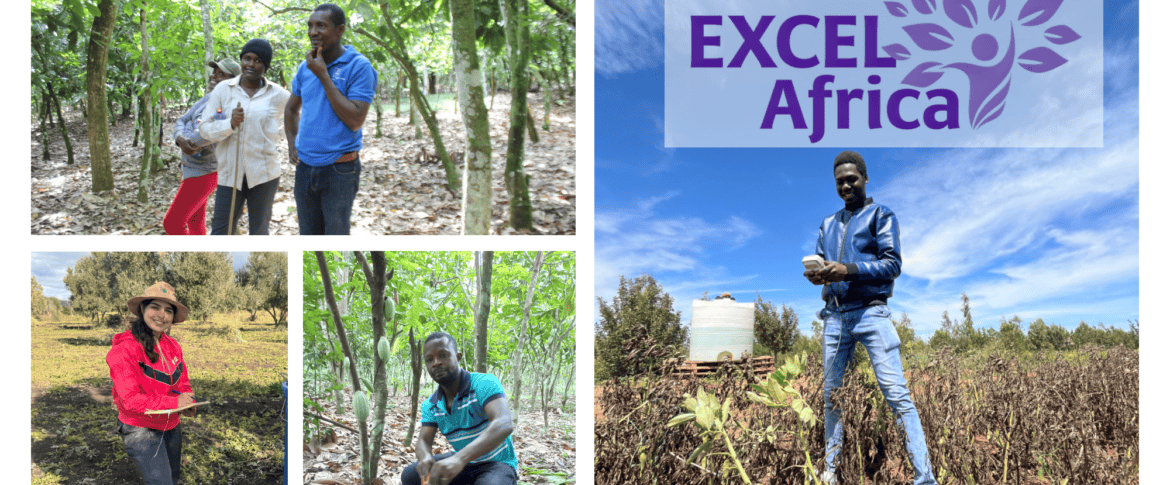
Developing Mentorship and Capacity for Research in Climate-Resilient Crop Nutrition (EXCEL Africa-ACIAR)

Solution Pathway: Building Capacity in Research and Extension Systems
Objectives
The project is designed around six core objectives:
- To strengthen mentorship, research and scientific leadership capacity among emerging researchers in climate-responsive crop nutrition and agronomy.
- To establish and strengthen partnerships among APNI, African research institutions, universities and Australian experts.
- To support GEDSI-responsive participation, mentorship and leadership opportunities for emerging supervisors and MSc scholars.
- To generate practical, field-based evidence on climate-responsive crop nutrition and agronomy in Morocco and Ghana.
- To strengthen skills in experimental design, field research, data analysis, scientific writing and student supervision.
- To create a Rising Researcher Network and develop an evidence-based roadmap for future Africa–Australia research collaboration.
Key Questions
EXCEL Africa addresses key questions including:
- How can cascading mentorship strengthen the capabilities of emerging supervisors and MSc scholars?
- What climate-responsive crop-nutrition and agronomic practices perform best within the project’s research platforms?
- How can applied field research generate relevant evidence for farmers, institutions and decision-makers?
- What institutional and individual barriers affect inclusive participation, research leadership and career progression?
- How can African and Australian partners build sustained research collaboration and future joint investment?
Approach
The project combines mentorship, capacity development, applied research and partnership building. It emphasises:
- Cascading mentorship between senior scientists, emerging supervisors and MSc scholars.
- Field-based research embedded in existing APNI research platforms in Morocco and Ghana.
- Training in research methods, climate-smart agronomy, GEDSI, leadership, supervision, data analysis and scientific publishing.
- Knowledge exchange through the Rising Researcher Network and engagement with Australian experts.
- Institutional assessment, partner consultation and scaling-roadmap development.
Project Model
The project will support 32 MSc scholars and 8 emerging supervisors through 8 research cohorts over two years.
Each year, 16 MSc scholars will participate: 8 in Morocco and 8 in Ghana. Each emerging supervisor will lead one cohort of four MSc scholars.
Main Institutional Partners
African Plant Nutrition Institute (APNI); Australian Centre for International Agricultural Research (ACIAR); Institut National de la Recherche Agronomique (INRA Morocco); Mohammed VI Polytechnic University (UM6P); University Ibn Zohr; Council for Scientific and Industrial Research (CSIR Ghana); University of Ghana; Kwame Nkrumah University of Science and Technology (KNUST); and Australian research partners.
Target Research Areas
Climate-responsive crop nutrition and agronomy; mentorship and research leadership; GEDSI-responsive research; and applied field research.
Target Countries
Morocco and Ghana.