
The Business Case for Investing in Soil Health
The Business Case for Investing in Soil Health: Insights from the World Economic Forum Report
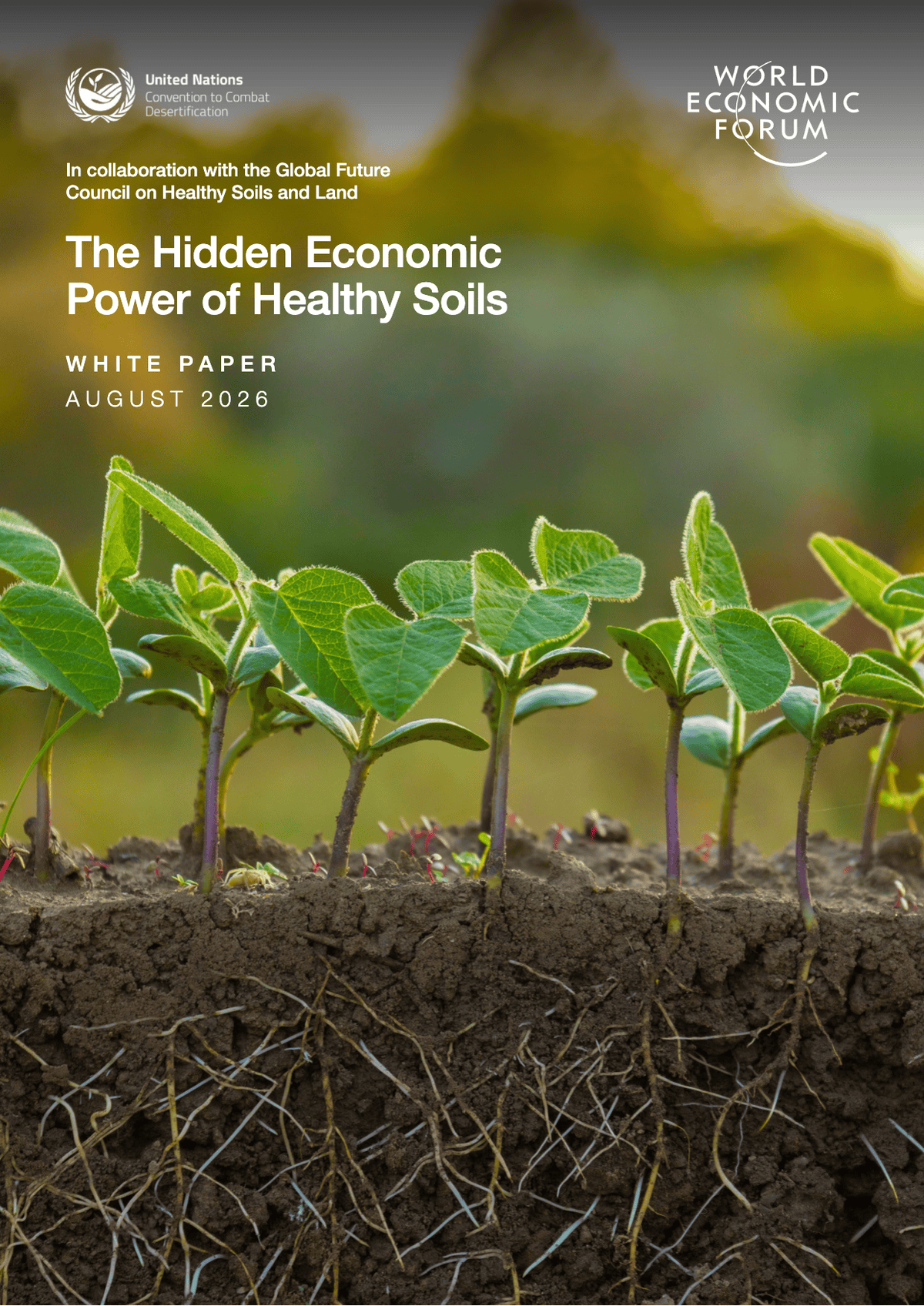
Soil has long been considered as an agricultural resource that requires sustainable management, but it is a less common topic central to boardroom discussions, investment strategies, or economic planning. The World Economic Forum’s report on “The Hidden Economic Power of Healthy Soils” argues that this perspective is fundamentally flawed and argues that healthy soils need to underpin our goals for business resilience, economic growth, and long-term prosperity.
For Africa, where agriculture employs a large share of the workforce and remains central to economic development, the report delivers the critical message that investing in soil health is one of the smartest business investments available today.
“Soil health is the ability of the soil to sustain the productivity, diversity, and environmental services of terrestrial ecosystems.” – FAO
The report describes soil as “living infrastructure” that supports interconnected systems ranging from food production and water regulation to biodiversity, climate resilience, and human health. Healthy soils store and cycle nutrients, retain water, support biological activity, and sustain agricultural productivity. Conversely, degraded soils increase production risks, reduce yields, and weaken the resilience of farming systems.
 Globally, land degradation already affects a substantial portion of agricultural land and imposes enormous economic costs. Yet these costs often remain invisible or ignored even in the face of declining yields, rising input requirements, supply-chain disruptions, and reduced profitability. If the soil in your supply chain is not healthy, your business is not healthy. This is as true for a multinational food company as it is for a smallholder farmer in Kenya.
Why Businesses Should Care
The WEF report identifies four key business benefits of healthy soils:
- Higher Productivity: Healthy soils improve nutrient cycling, water retention, and biological activity, enabling crops to access the resources they need to grow. The result is stronger and more consistent yields, improved input-use efficiency, and better margins for farmers. For agribusinesses, healthier soils mean more reliable supply volumes and improved product quality.
- Reduced Volatility: Businesses value predictability as much as productivity. Healthy soils buffer production systems against seasonal variability and weather extremes by improving water-holding capacity and reducing yield fluctuations. This translates into more stable supply chains and lower exposure to market shocks.
- Greater Resilience: Climate risks are increasing across agricultural regions worldwide. Healthy soils improve infiltration, reduce erosion, and help crops withstand both droughts and floods. Businesses that depend on agricultural raw materials benefit from more resilient production systems capable of recovering more quickly from shocks.
- Long-Term Value Creation: Unlike many short-term investments, soil health improvements compound over time. Maintaining soil function preserves the productive capacity of land, supports business continuity, and reduces exposure to future risks. In this sense, soil health should be viewed as a strategic asset rather than merely an operational input.
Africa: A Unique Opportunity
One of the report’s most important observations is that the soil health challenge looks different in Africa than in many industrialized regions. While some agricultural systems struggle with degradation caused by decades of intensive production, many African farming systems face low inherent soil fertility and decades of nutrient depletion. For much of Africa, farmers must simultaneously rebuild soil organic matter, replenish nutrients, and increase productivity to meet growing food demand.
Evidence from Kenya: A Strong African Business Case
One of the report’s featured case studies comes from western Kenya and draws on research by APNI. The study examined the combination of balanced mineral fertilization with organic amendments such as manure, using the 4R Nutrient Stewardship Principles within the broader context of Integrated Soil Fertility Management or ISFM. Results showed clear advantages including:
- Maize yield of smallholder farmers doubled through integrated mineral and organic nutrient use.
- Soil organic carbon increased 18%.
- Available soil phosphorus and exchangeable potassium doubled.
- Additional profits of US$460/ha.
- Benefits persisted years after manure application.
The study demonstrated that combining mineral fertilizers with organic inputs generated stronger long-term outcomes than with only manure or mineral nutrient application. Soil fertility investments produced returns that accumulated over time.
Implications for African Agribusiness
The report sends a clear signal to agribusinesses operating across Africa.
- Soil Health Is Supply-Chain Security: Food processors, retailers, exporters, fertilizer companies, and input suppliers all depend on productive farming systems. Investments that improve soil health can strengthen supply reliability and reduce sourcing risks.
- Regenerative Practices Can Improve Profitability: The evidence presented throughout the report shows that soil health interventions frequently deliver both environmental and financial returns. Better nutrient-use efficiency, reduced production risks, and improved crop performance can create measurable economic value.
- Investors Are Paying Attention: Financial institutions are increasingly recognizing that soil degradation creates material business risks. As sustainability reporting frameworks evolve, companies will be expected not only to understand their dependence on healthy soils but also to demonstrate how they are managing soil-related risks and opportunities.
- Data and Measurement Are Becoming Essential: Advances in soil monitoring, remote sensing, digital agriculture, and artificial intelligence are making it easier to assess soil health and connect improvements directly to business outcomes. For Africa, these innovations offer an opportunity to leapfrog traditional monitoring systems and build scalable, evidence-based soil management programs.
Five Actions for Business
- Make soil dependencies visible by understanding where operations and supply chains depend on healthy soils.
- Measure what matters using practical soil health indicators.
- Align incentives with stewardship so farmers are rewarded for building soil health.
- Invest in the transition through innovative financing mechanisms and long-term partnerships.
- Work together through collaboration across value chains, research institutions, governments, and financial organizations.
A Strategic Investment for Africa’s Agricultural Transformation
Africa’s agricultural future depends on producing more food, improving farmer livelihoods, and building resilience to climate change. The WEF report makes a compelling case that soil health sits at the center of all three objectives.
Healthy soils improve productivity, strengthen resilience, reduce business risk, and create long-term value. For farmers, they mean better harvests and more stable incomes. For agribusinesses, they mean stronger supply chains and greater profitability. For governments, they support food security and economic stability. For investors, they represent an opportunity to build durable value while reducing risk.
Soil health is no longer merely an environmental concern. It is a business imperative and one of Africa’s most important opportunities for sustainable agricultural growth.
This article has been extracted from World Economic Forum. 2026. The Hidden Economic Power of Healthy Soils. White Paper. Geneva: World Economic Forum in collaboration with the United Nations Convention to Combat Desertification. https://www.weforum.org/publications/hidden-economic-power-of-healthy-soils/.