
What AFS 2026 Means for Plant Nutrition in Africa
A good nutrient recommendation can begin with years of research: soil data, crop trials, nutrient-response studies and careful analysis.
But between that science and a farmer standing in a field deciding what to apply, how much to use and when to use it, there is another part of the story. There must be someone capable of turning evidence into a decision.
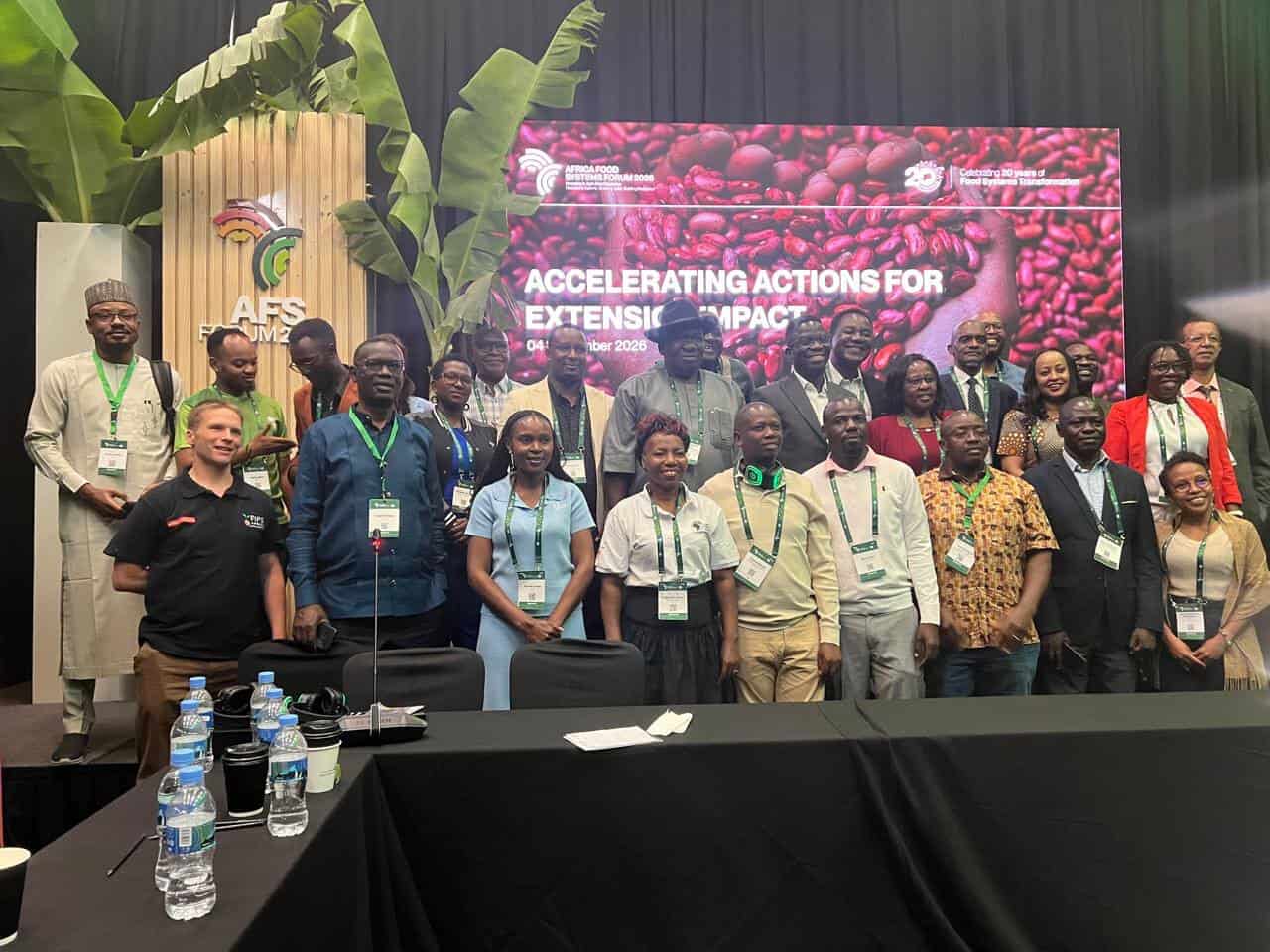
That connection between science, people and institutions emerged strongly during the Africa Food Systems Forum (AFS) 2026, held in Kigali, Rwanda, from 31 August to 4 September. APNI was represented at the Forum by Dr. James Mutegi and Dr. Canon Savala.
The journey from evidence to action
For plant nutrition, this challenge is particularly important.
A farmer rarely receives scientific evidence in the form in which researchers produce it. Soil data, nutrient-response research and agronomic recommendations have to be interpreted within the realities of an individual farm.
What crop is being grown? What is the condition of the soil? How much rainfall is expected? Which inputs are locally available and affordable? What are the farmer’s production and market objectives?
This is where agricultural advisers become an essential bridge between research and practice.
APNI’s 4R Nutrient Stewardship framework – applying the right nutrient source, at the right rate, at the right time and in the right place – provides a scientific foundation for that decision-making. But applying the 4Rs under real farming conditions also requires professional judgement, local evidence and an understanding of farmers’ resources and risks.
AFS 2026 therefore reinforced an important principle for APNI: better plant nutrition science and stronger advisory systems must develop together.
Building the people behind the science
The same idea extends to the next generation of African researchers.
During AFS 2026, APNI met with the Australian Centre for International Agricultural Research (ACIAR) on 3 September to discuss the ongoing collaborative EXCEL Africa project, APNI’s initiative focused on developing research capacity in climate-responsive crop nutrition.
The conversation went beyond the number of students participating in the programme. It explored how young researchers are recruited, mentored and trained; how responsibilities are shared between institutions; how inclusive participation can be strengthened; and how progress and outcomes can be measured.
These questions point to something bigger.
Developing a researcher is not simply about providing training. It means surrounding that researcher with mentors, universities, scientific networks, practical research opportunities and systems that allow knowledge to continue developing.
And the research pipeline does not have to end at the university.
Young scientists can generate and interpret locally relevant evidence. Professional agronomy advisers can translate validated evidence into recommendations for farmers. Farmers’ experiences can then reveal what works, what does not and what new questions researchers need to investigate.
In that way, knowledge travels in both directions.
Research informs the field, and the field informs research.
From training advisers to strengthening advisory systems
One of the strongest themes emerging from AFS 2026 was the need to look beyond individual training.
An adviser may have excellent technical knowledge. But without access to updated information, transport, digital tools, supervision, professional development or institutional support, that knowledge may never reach farmers effectively.
Similarly, a sophisticated digital platform cannot solve the problem alone. Without trusted science, local interpretation and mechanisms for farmer feedback, technology can simply deliver unsuitable advice faster.
The Forum discussions highlighted the need to strengthen the wider environment surrounding agricultural advisers: institutions and policies; professional competencies and career pathways; knowledge and digital infrastructure; last-mile delivery capacity; and systems for learning from farmers and field evidence.
For APNI, this opens an opportunity to connect its scientific expertise more deliberately with Africa’s evolving agricultural extension systems.
Finding strength through partnership
The emerging Africa Extension Coalition (AEC) provides one possible pathway.
Its founding members – AGRA, the African Forum for Agricultural Advisory Services (AFAAS) and One Acre Fund – bring together complementary capabilities in agricultural transformation, extension systems and farmer delivery. APNI has been identified as a strategic technical partner, creating an opportunity to contribute specialized expertise in plant nutrition and soil health.
Through its work in plant nutrition science, 4R Nutrient Stewardship, site-specific agronomy, the Professional Certified Agronomy Advisor Program (PCAAP), EXCEL Africa, trainer development and field-based research, APNI can help translate scientific knowledge into competencies, curricula, assessment approaches and practical advisory tools.
Within such a partnership, the strengths are complementary: AFAAS can connect actors across continental and national extension networks; AGRA can help connect extension priorities with policy, investment and government-led transformation; while APNI can contribute the technical depth required for scientifically sound plant nutrition and soil-health advice.
The objective is not another institution working independently.
It is a stronger pathway from science to adviser to farmer, and from farmer back to science.
Technology can scale advice. People make it meaningful.
Digital agriculture and artificial intelligence were also prominent in Kigali.
These technologies offer enormous possibilities for expanding access to personalized agricultural information. But AFS 2026 also highlighted the conditions that determine whether digital advisory tools genuinely work: reliable data, affordability, local-language accessibility, privacy, human oversight and clear measures of impact.
For plant nutrition, technology can help an adviser access soil information, interpret data or compare nutrient-management options.
It cannot automatically understand every farmer’s circumstances.
That is why digital tools are most powerful when they strengthen professional judgement rather than attempt to replace it.
Connecting the pieces
The conversations in Kigali ultimately brought APNI back to a simple idea.
Africa does not have to choose between investing in better agricultural science and investing in the people and institutions that deliver it.
It needs both.
Research generates evidence. Universities develop scientists. Professional training develops advisers. Digital systems expand access to information. Extension institutions connect knowledge with farmers. And farmers themselves provide the experience and feedback that keep the entire system grounded in reality.
For APNI, the opportunity is to help connect these pieces around plant nutrition.
The success of that work will not ultimately be measured by how many meetings are held, courses delivered or certificates awarded.
It will be visible much further down the chain: when an adviser stands with a farmer in a field, understands the conditions in front of them, and has the knowledge, evidence and tools to help that farmer make a better decision.