
Strengthening Nutrition from the Ground Up: APNI’s Study on Wheat Quality in Morocco
Contributor: Sara Lamsili, Project Communication Manager
In Morocco, wheat is a staple cereal crop that provides a daily source of nourishment for millions. Yet, despite decades of economic growth the country remains heavily dependent on cereal imports, bringing in over 8.8 million tonnes in 2022. Nearly 6% of the population still faces undernourishment as well (FAO, 2023). Behind these figures lies a crucial question: How can Morocco strengthen both the quantity and quality of its wheat to improve food and nutrition security?
APNI, in collaboration with the International Center for Agricultural Research in the Dry Areas (ICARDA), is seeking answers through the Diagnostic Study on Nutritional Quality of Wheat in Morocco, a research initiative under the Excellence in Agronomy (EiA) and Resilient Agriculture for African Drylands (RAFAD) programs.
Across the key wheat-growing regions of Rabat-Salé-Kénitra and Beni Mellal-Khénifra, scientists are examining how soil fertility, farmer practices, and local growing conditions influence the concentration of essential micronutrients like iron (Fe) and zinc (Zn) in wheat grain. These two minerals are vital to human health, and their deficiency, reflected in the high prevalence of anemia among Moroccans signals a deeper nutritional imbalance rooted in the soil.
“Enhancing yields alone isn’t enough,” explains Mahdi Dahane, agronomist at APNI. “We need to make sure the wheat feeding our communities is also rich in the micronutrients that sustain life.”
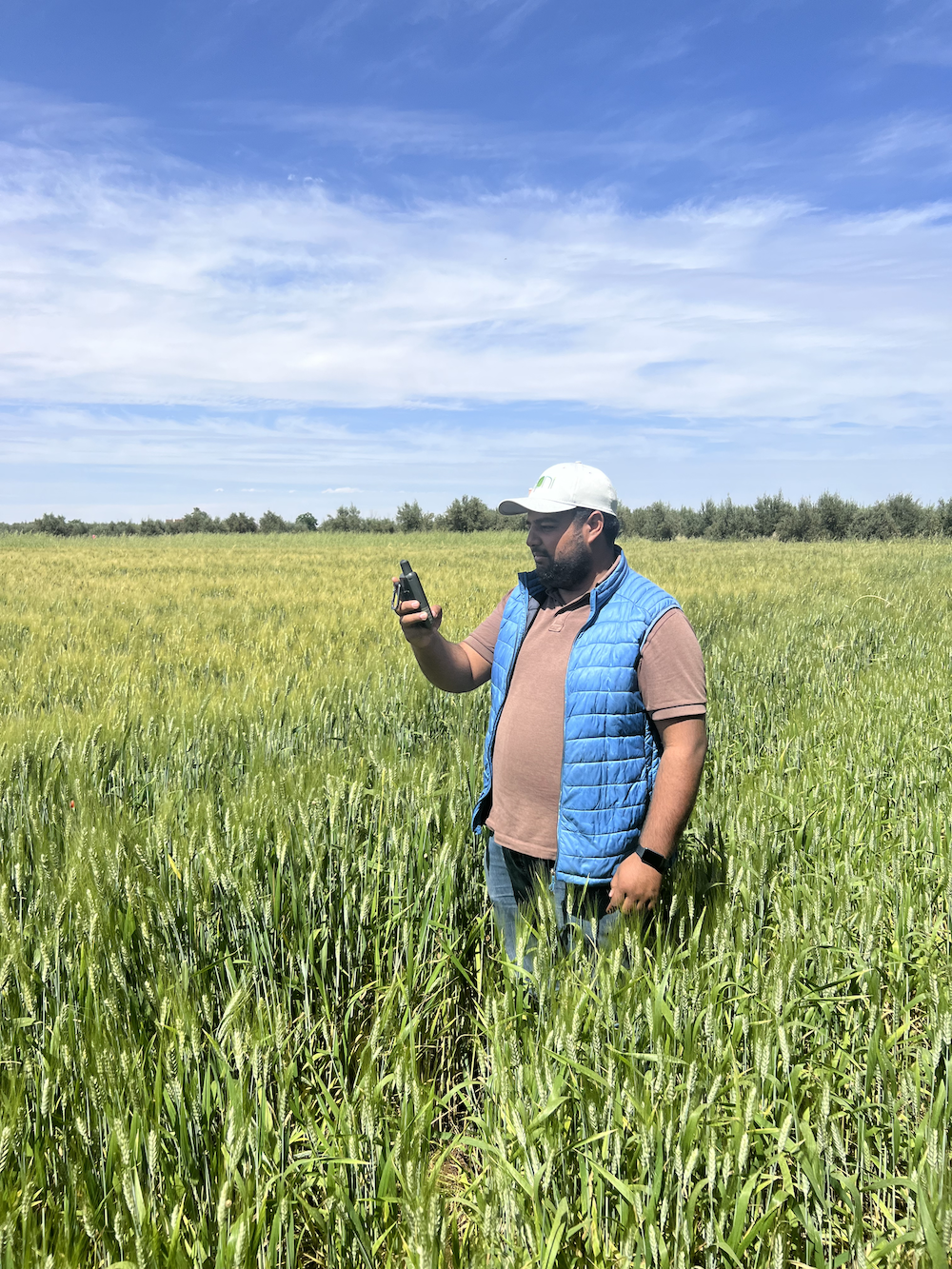
Mahdi Dahane, APNI Agronomist, scouting a wheat field site.
By studying wheat cultivated under real farmer management, the project aims to close the knowledge gap on how fertilizer use and crop management affect grain nutritional quality. The findings will help design agronomic biofortification strategies, practical, field-level interventions that naturally increase the nutritional value of crops.
Through this work, APNI and its partners are paving the way for a future where every grain of wheat nourishes not only the body but also the resilience of Morocco’s food systems.
An overview of the project can be found here.