
Opportunities for Added Value and Sustainable Development in Moroccan Argan Farming
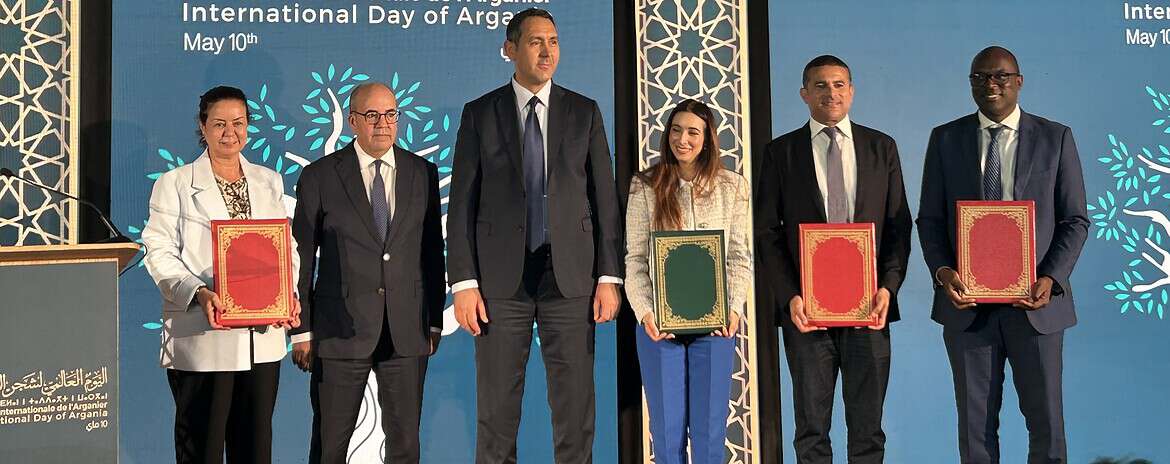
Dr. Hakim Boulal, Regional Coordinator of APNI North Africa, participated in the International Argan Congress in Essaouira, Morocco, during 8-11 May 2026. Dr. Boulal was an invited panelist during the round table discussion about carbon markets and argan farming and the opportunities for valorization and sustainable development. Dr. Boulal presented a new vision supporting the future of argan cultivation through its integration into carbon markets as a mechanism enabling smallholder farmers to lead environmental restoration efforts.
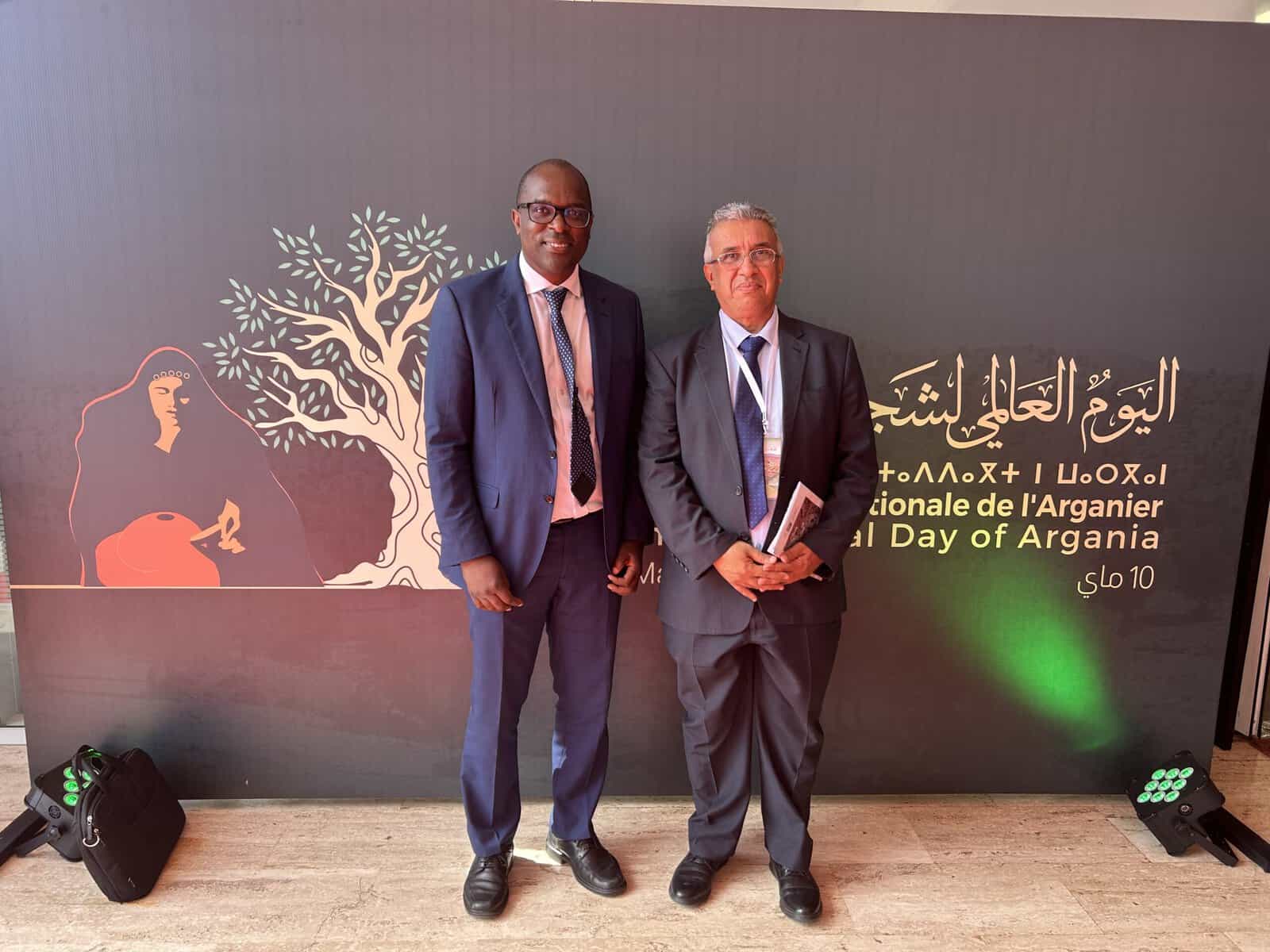
Dr. Shamie Zingore, Director, R&D (left) and Dr Hakim Boulal, North Africa Regional Coordinator (right).
Dr. Boulal emphasized that climate finance through carbon markets could open new perspectives for argan tree ecosystems, since plantations have a significant carbon storage capacity, both in biomass and in soil organic carbon. However, he cautioned that access to these markets remains limited due to the lack of methodologies adapted to the Moroccan context, the lack of reliable data, and the absence of integrated payment models for ecosystem services.
Drawing on a successful APNI experience in Uganda, he demonstrated how a carbon project linked to coffee cultivation involved thousands of farmers, distributed thousands of seedlings, and provided them with direct financial compensation through payment for ecosystem services mechanisms. He suggested that this model could inspire similar initiatives for argan trees.
“The approach requires the development of a rigorous scientific framework to measure soil carbon and integrate it into carbon credit assessments, as underground carbon represents a considerable yet untapped reservoir.”
He further advocated for diversifying the argan tree system by introducing adapted species such as cactus to enhance food security and generate additional resources, while emphasizing the need for economic and environmental analyses to ensure project viability.
The concept of “premium carbon credits for the argan tree” is a promising development as a model based on integrating small-scale farmers into international carbon programs according to standards such as Plan Vivo.
“In this perspective, the argan tree becomes not only an environmental tool for combating climate change, but also a social and economic platform for rebuilding the relationship between people and the land, with farmers themselves being the main actors in the restoration processes and the beneficiaries of the revenue generated by carbon markets,” – Dr. Hakim Boulal, APNI North Africa Regional Coordinator
APNI – ANDZOA Agreement Signing
During the International Argan Congress in Essaouira, Morocco, and in the presence of his excellence Mr. Ahmed Bouari, Minister of Agriculture, Maritime Fisheries, Rural Development, and Water and Forests of Morocco, Dr. Shamie Zingore, Director R&D, represented APNI at the signing ceremony for its agreement with ANDZOA (Agence Nationale pour le Développement des Zones Oasiennes et de l’Arganier) represented by Mrs. Latifa Yaacoubi, ANDZOA Director General.
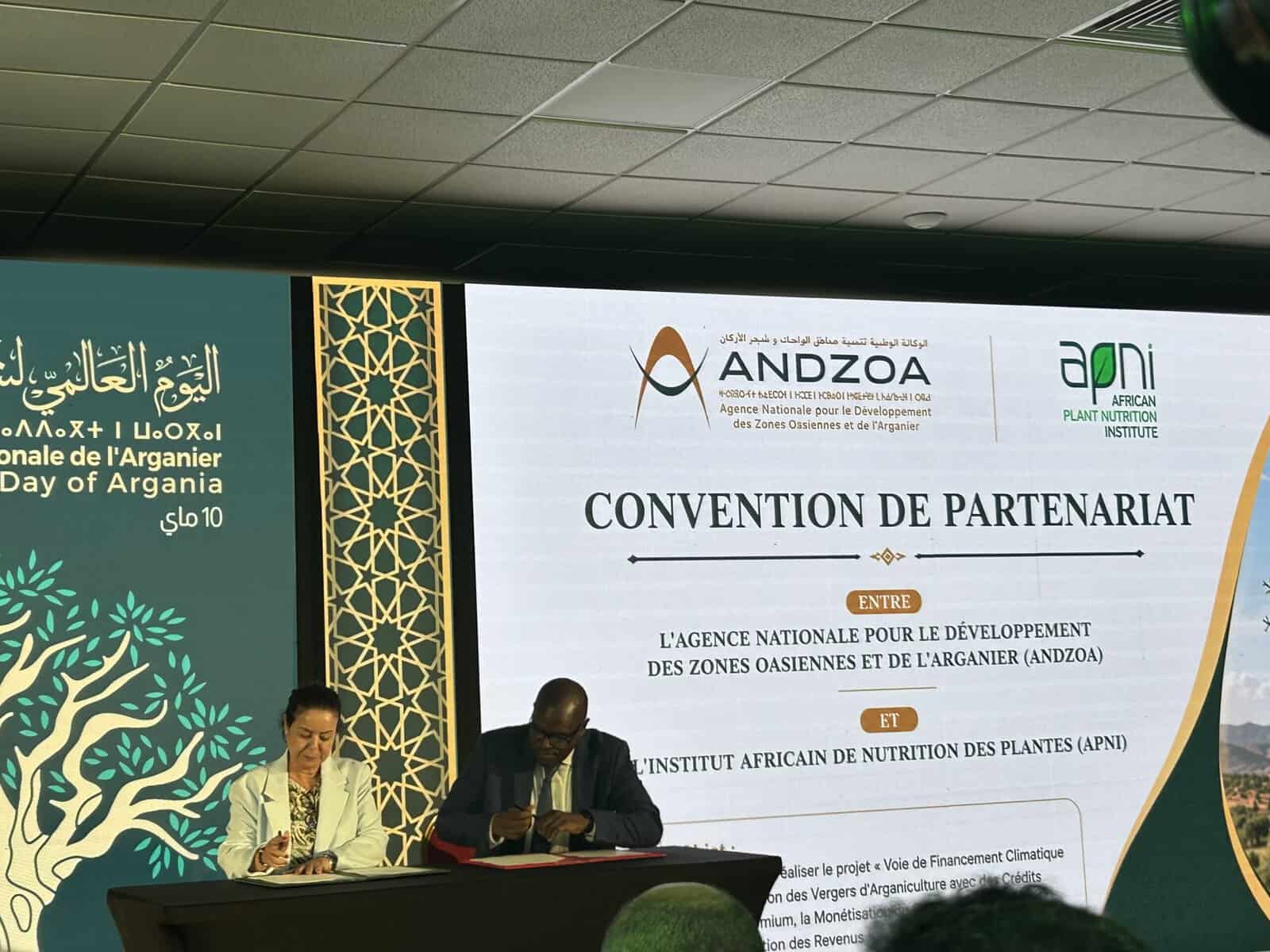
Mrs. Latifa Yaacoubi, ANDZOA Director General (left) and Dr. Shamie Zingore, APNI Director R&D during the APNI-ANDZOA signing ceremony.
This agreement reinforces the collaboration between APNI and ANDZOA within the research and development domain about the role of Arganiculture as a new opportunity for the integration of smallholder argan growers into climate finance mechanisms and a renewed perspective for generating and diversifying revenues.